Wet Cut vs. Dry Cut: Which Is Better for Your Hair?
"Should my hair be cut wet or dry?" is a smart question—but there isn't one winner for every head of hair. A good haircut is about the shape you're creating and how your hair behaves when you wear it.
What wet cutting does well
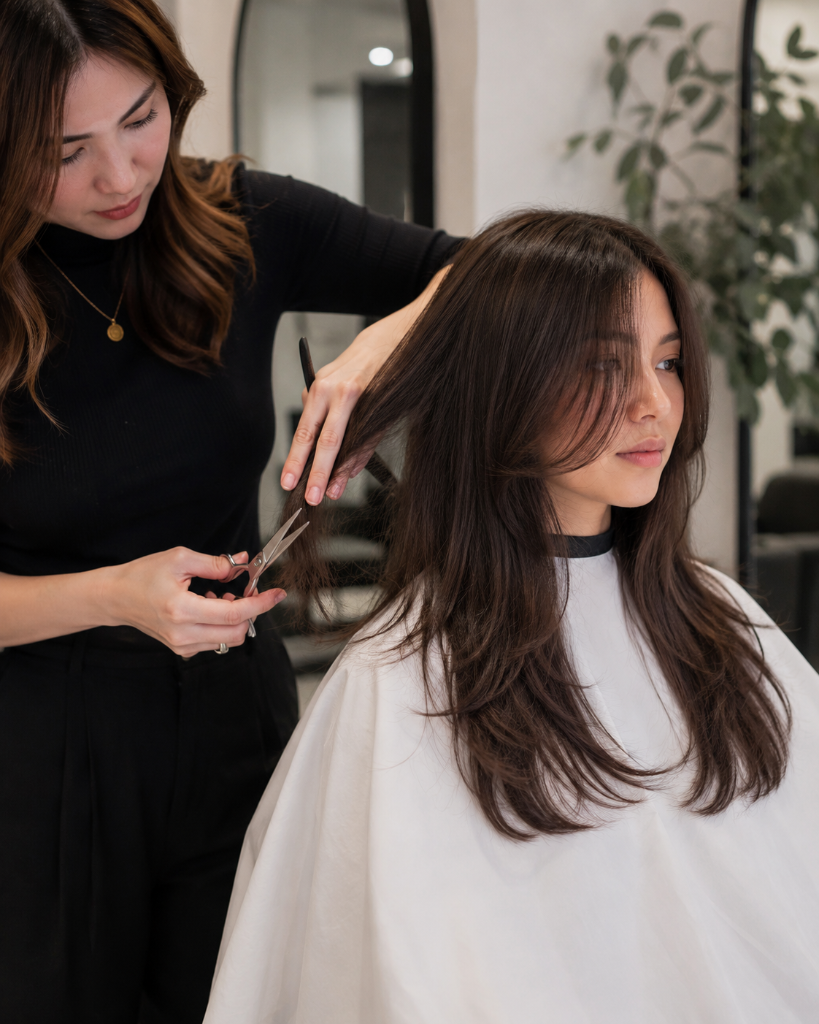
Cutting on damp hair allows the stylist to section hair evenly and create controlled lines. This can be useful for bobs, blunt ends, graduated shapes, and many classic haircuts.
Hair looks longer when wet, however. Curly or wavy hair can spring upward as it dries, so the stylist needs to account for shrinkage.
Why choose a dry cut?
A dry cut lets the stylist see your hair's natural curl, wave, density, and movement as the shape develops.
It may be particularly helpful if you wear your curls natural, have areas that spring up differently, or want layers shaped around the way your hair actually falls.
Dry cutting isn't automatically better for every curly client—and wet cutting isn't automatically wrong. Many stylists blend techniques.
How should you arrive?
For a true dry-shaping consultation, ask the salon how they want your hair prepared. Usually it helps to arrive with hair clean, dry, detangled as appropriate, and styled close to how you normally wear it—not freshly flat-ironed if you want the stylist to see your curls.
For a wet cut, shampooing and finishing may be included in the service. Confirm what's included when requesting the appointment.
Three useful questions for your stylist
- How much will this length shrink when dry?
- Will these layers work with my natural texture?
- How much styling will I need to recreate the finish at home?
Bottom line: Choose a stylist who listens to how you wear your hair, not a cutting method based on a trend.
Explore Wet Cutting and Dry Cutting. If you're aiming for natural texture between washes, Ocean Waves may be useful for some hair types.